
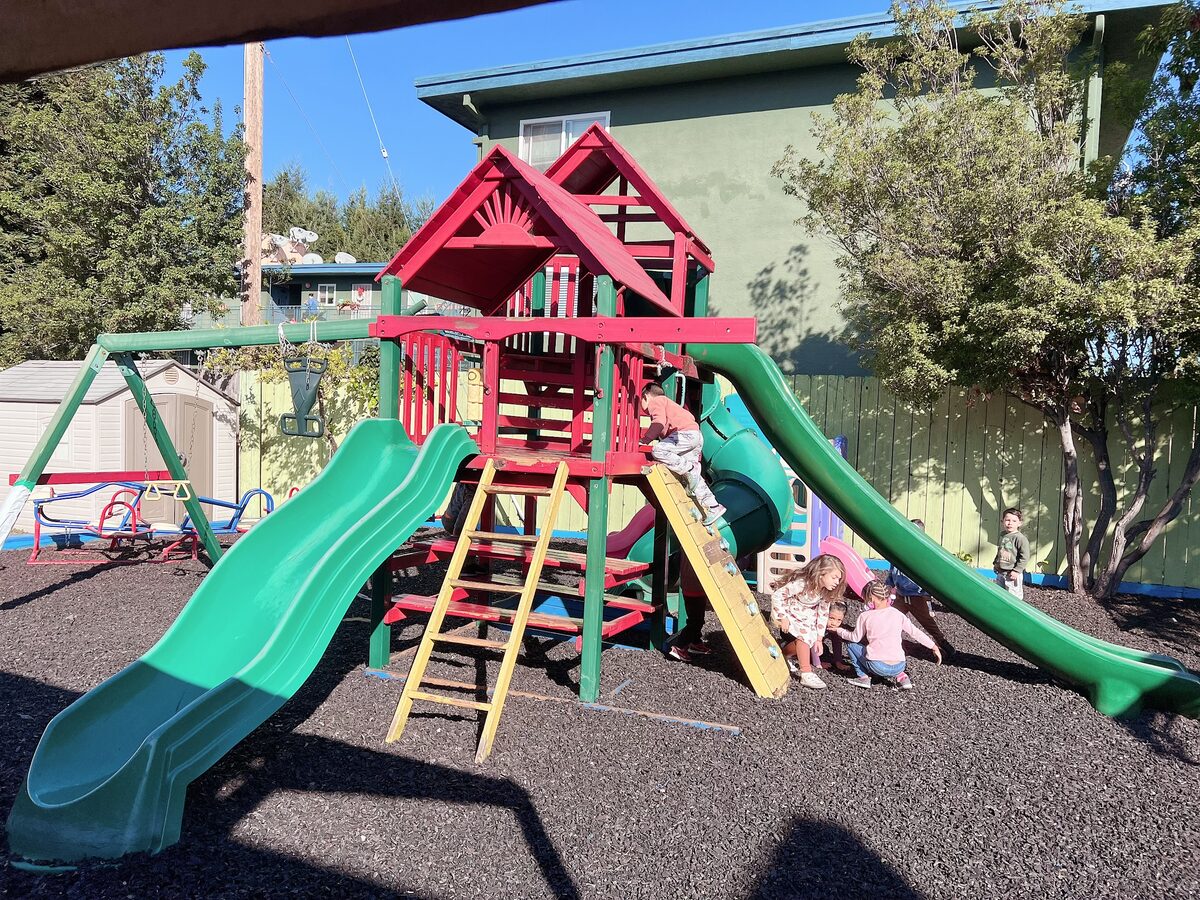
For young children, the word “studying” is misleading. Children under six do not study the way adults do — sitting still, reading a textbook, taking notes. Their learning looks like conversation, play, repeated practice, and hands-on discovery. The goal is not to make a preschooler sit at a desk. The goal is to nurture the natural curiosity that makes children want to learn, so that when they encounter letters, numbers, and new ideas, they respond with interest rather than resistance.
Start with the child’s questions
Children are born curious. The question “Why is the sky blue?” is not a distraction — it is the beginning of a science lesson. Use your child’s interests as the starting point for learning. If your child loves animals, count toy animals, read books about animals, sort them by habitat, and visit animals at the park. If your child is fascinated by vehicles, name the letters on a fire truck, count the wheels on a bus, and draw the shapes of cars.
This approach is called “emergent curriculum” — the idea that learning grows from the child’s interests rather than a fixed adult agenda. At Bubbly Tots Learning Center, teachers use this approach daily, building lessons around what children are noticing and asking about.
Keep practice short and regular
A few focused minutes are more productive than a long session. A three-year-old’s attention span is 5 to 10 minutes for a directed task. After that, learning becomes frustration. Stop before the child loses interest, and return the next day. Short, consistent practice builds habits without burnout.
Try a routine: five minutes of letter play after breakfast, three minutes of counting before bath time. The key is regularity, not duration. Five minutes daily for a week equals 35 minutes of practice — far more effective than a single 35-minute session that ends in tears.
Give meaningful choices
Let your child choose which book to read first, what color crayon to use, or whether to count with buttons or blocks. The learning goal stays the same, but the child feels ownership over the activity. Choice builds intrinsic motivation — the child is doing the task because they chose it, not because they were told to.
Offer two or three options at a time. More than three can overwhelm a young child. Frame choices positively: “Would you like to read the animal book or the truck book?” rather than “Stop watching TV and pick a book.”
Notice effort and strategy
Instead of generic praise like “Good job!” describe what your child actually did: “You tried a different piece when the first one did not fit,” or “You kept looking until you found the letter.” Specific feedback helps children understand which strategies work, building persistence and problem-solving confidence.
Research from Stanford psychologist Carol Dweck shows that praising effort and strategy (rather than fixed ability) helps children develop a “growth mindset” — the belief that skills grow with practice. Children with a growth mindset are more likely to persist when learning becomes challenging, which is essential for long-term academic success.
FAQ
How do I make learning fun for my preschooler?
Follow your child’s interests, keep activities short (5–10 minutes), use hands-on materials, and let your child make choices within the activity. Learning that feels like play is the most effective kind for this age.
Should I use worksheets or flashcards with my young child?
For children under five, hands-on activities and play-based learning are more effective than worksheets. Flashcards can be useful in short bursts if your child enjoys them, but they should supplement, not replace, experiential learning.
How can I tell if my child is ready for structured learning?
Most children show readiness signs between ages 3 and 4: longer attention span, interest in letters and numbers, ability to follow simple multi-step directions, and curiosity about how things work. If your child is not there yet, keep learning play-based — readiness comes with development, not pressure.
Want to see a play-based learning curriculum in action? Schedule a tour at Bubbly Tots Learning Center or call/text 510-351-0300.
Explore learning at Bubbly Tots
See how caring routines, play, and family communication come together in our San Leandro programs.
Explore programs