
“Why is the sky blue?” “Where do babies come from?” “What happens if I put this in my nose?” A young child’s questions can be relentless, surprising, and sometimes unanswerable. But curiosity is the engine of all learning. Every question is a child practicing the most important skill they will ever develop: the ability to wonder, investigate, and make sense of the world. How parents respond to those questions shapes whether curiosity grows or fades.
Pause before answering
When your child asks a question, your first instinct may be to provide an immediate answer. Instead, try pausing. Ask: “What do you think?” This simple response does two things. First, it gives you a window into what your child already understands, so you can tailor your explanation. Second, it signals that your child’s ideas matter, which builds the confidence to keep asking.
A child who asks “Why do dogs bark?” might already have a theory: “Maybe they are talking to each other.” Starting from their theory makes the conversation richer and helps your child practice reasoning, not just receiving information.
Investigate together
Instead of answering immediately, model how to find the answer. Look closely at the thing together. Try a safe experiment. Check a child-friendly book. Draw a picture of what you see. Ask someone who knows more. This teaches your child that not knowing something is normal, and that the process of finding out is itself a valuable skill.
If your child asks why leaves change color, collect some leaves, sort them by color, and look at pictures of trees in different seasons. If your child asks how a plant grows, plant a seed in a cup and watch it together over a week. The investigation matters more than the answer.
“Let’s find out” teaches more than a confident answer ever could. It shows children that learning is an active, shared process — not a transfer of facts from adult to child.
Use clear, honest language
Give an age-appropriate explanation and say when you do not know. “I’m not sure — let’s look it up together” is one of the most powerful sentences a parent can say. It teaches humility, curiosity, and the habit of seeking answers rather than accepting the first thing you hear.
Avoid oversimplifying or fabricating answers. Children can tell when an answer is vague or made up. Instead, give as honest and specific an explanation as your child can understand. If a topic is complex, break it into pieces: “Some things are too big for one answer. Let’s start with this part.”
Keep safe boundaries
Curiosity needs limits around roads, tools, electricity, water, unfamiliar plants, hot surfaces, and other hazards. The boundary is not a rejection of curiosity — it is a framework that keeps exploration safe. Explain the boundary: “That outlet is dangerous. You cannot touch it. But you can help me plug in this lamp over here.” Offer a safe alternative whenever possible so the child’s curiosity is redirected, not shut down.
Encouraging curiosity at Bubbly Tots
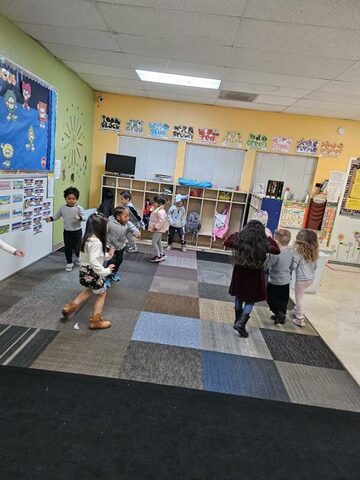
At Bubbly Tots Learning Center, curiosity is built into the daily curriculum. Teachers use an emergent approach that follows children’s questions, designing activities around what children are noticing and asking about. Classrooms include investigation stations, sensory tables, and outdoor exploration spaces where children can safely follow their curiosity with guidance from trained educators.
FAQ
What if I don’t know the answer to my child’s question?
Say so. “I don’t know — let’s find out together” is the best possible response. It models honesty, shows that learning is a shared process, and teaches your child how to seek answers.
How many questions should a preschooler ask per day?
Studies estimate that children ages 3 to 5 ask an average of 70 to 100 questions per day. The number declines around age 5 if curiosity is not actively encouraged. Keeping the channel open matters.
Is it okay to redirect questions I don’t want to answer yet?
Yes. If a topic is not age-appropriate, say “That’s a great question. Let’s talk about it when you’re a little older.” Don’t shut down the question — acknowledge it and set a timeline.
Want to see a curiosity-driven curriculum in action? Schedule a tour at Bubbly Tots Learning Center or call/text 510-351-0300.
Explore learning at Bubbly Tots
See how caring routines, play, and family communication come together in our San Leandro programs.
Explore programs